

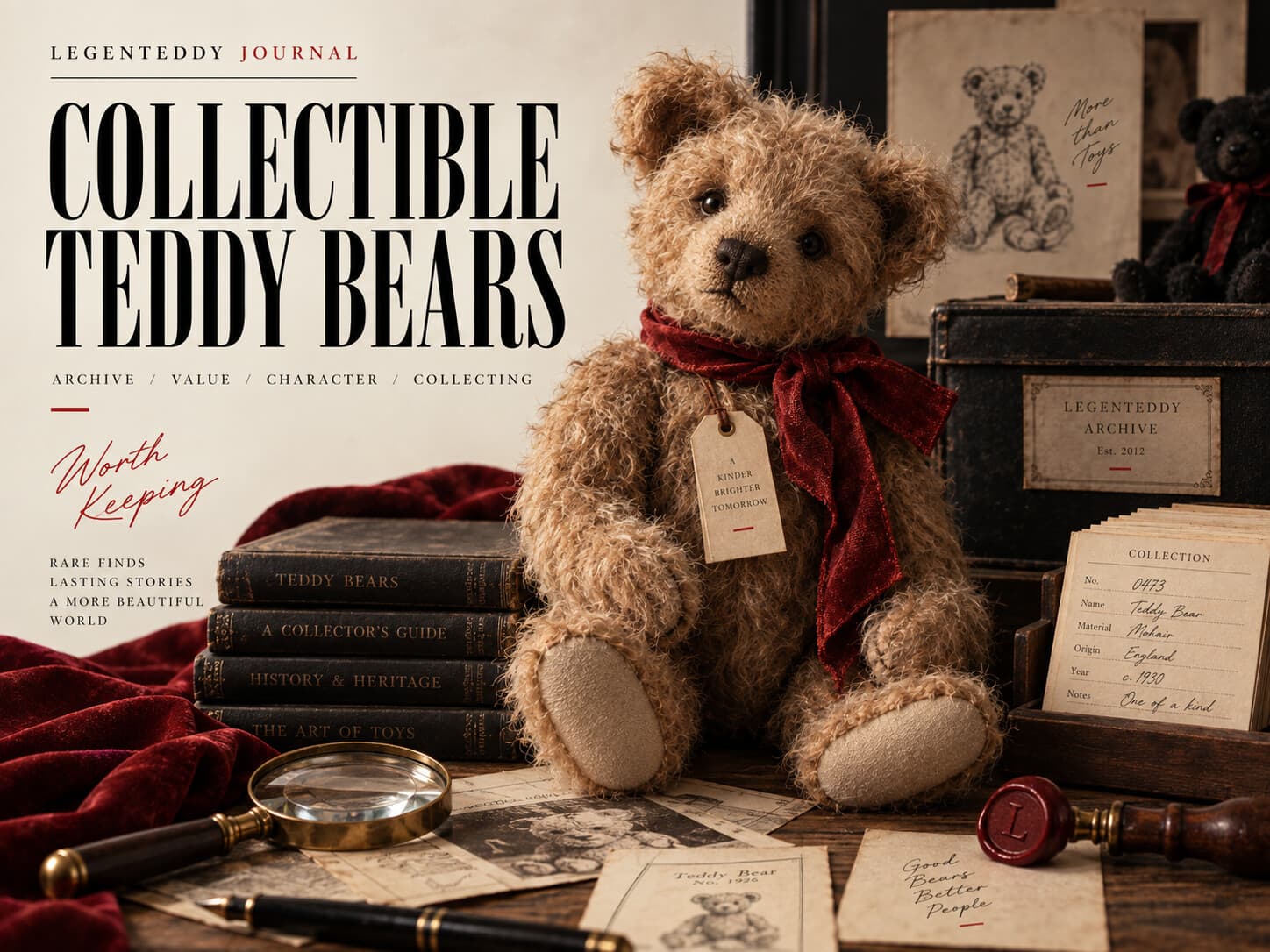
Collectible, decorative or made for play?
These categories can overlap, but they describe different priorities. A play bear is designed first for repeated handling and must meet the safety expectations appropriate to its intended age group. A decorative bear may be chosen mainly to complete an interior or seasonal display. A collectible artist bear is acquired as an authored object, with attention to who made it, how it was made and where it sits within a body of work.
That distinction is practical as well as cultural. Artist bears may use delicate surfaces, glass eyes, cotter-pin or disc joints and small hand-finished elements. They are generally intended for adult collectors, not as children’s toys. Their value is preserved through considerate display, handling and documentation.
What collectors look for
Craftsmanship is one part of the picture: secure construction, balanced proportions, considered finishing and materials that suit the design. Yet technical neatness alone does not make a memorable work. Collectors also look for coherence — a sense that the fabric, expression, scale and details belong to the same character.
Materials can add beauty, tactile interest and historical reference. Mohair and alpaca are valued for their natural movement; vintage textiles can carry age and variation; hand-dyed or distressed surfaces can deepen a character. The material should not merely sound impressive. It should contribute visibly to the work.
Rarity, authorship and provenance
Rarity has meaning when it is supported by authorship. A unique bear from a known maker has a clear creative origin, especially when it carries a work number and is documented with its name, date and materials. These details help a collector understand the object and maintain its history over time.
The maker’s identity also provides context. Looking at the artist behind LEGENTEDDY and moving through the archive of earlier characters reveals recurring ideas as well as change. A collection becomes more legible when each work can be seen as part of an evolving practice.
Collecting as an aesthetic practice
There is no single correct way to build a collection. Some people follow one maker closely; some gather a particular period, material or scale. Others choose intuitively and discover the connecting thread later. A small group of deeply felt works can say more than a room filled without discrimination.
The most durable reason to collect is attention: returning to an object and continuing to find expression in it. Teddy bears are unusual in this respect. They occupy space like sculpture, carry evidence of the hand, and still meet the viewer with a face. Their familiarity makes subtle differences especially powerful.
Worth keeping
A collectible teddy bear holds together craft, character and a documented creative origin. Rarity may bring a work to notice, but it is the strength of the object — and the collector’s continuing response to it — that earns its place over time. Explore the current LEGENTEDDY collection or revisit characters now living in private collections.